Open AccessArticle
Immune Regulatory Endotypes Defined by TRIM-Dependent Ubiquitin Signaling and IFN–NF-κB Network Activity in Ankylosing Spondylitis

1
Department of Physical Medicine and Rehabilitation, Faculty of Medicine, Sivas Cumhuriyet University, Sivas 58140, Turkey
2
Department of Food Processing Technologies, Yıldızeli Vocational School, Sivas Cumhuriyet University, Sivas 58140, Turkey
3
Department of Medical Biochemistry, Faculty of Medicine, Sivas Cumhuriyet University, Sivas 58140, Turkey
*
Author to whom correspondence should be addressed.
Int. J. Mol. Sci. 2026, 27(13), 5823; https://doi.org/10.3390/ijms27135823 (registering DOI)
Submission received: 9 May 2026 / Revised: 16 June 2026 / Accepted: 25 June 2026 / Published: 27 June 2026
(This article belongs to the Special Issue Recent Advances in Rheumatic Diseases and Rheumatoid Arthritis)
Abstract
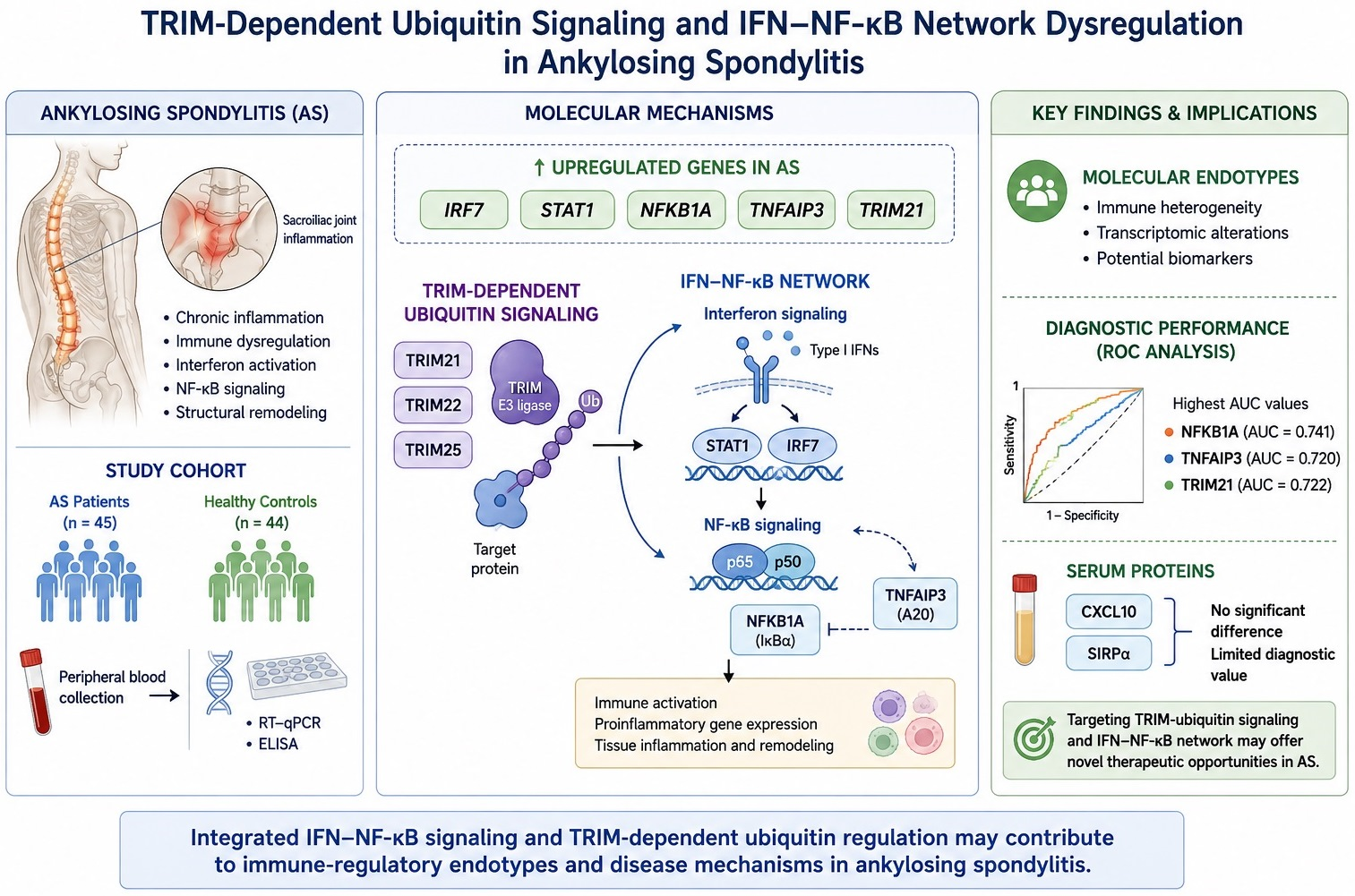
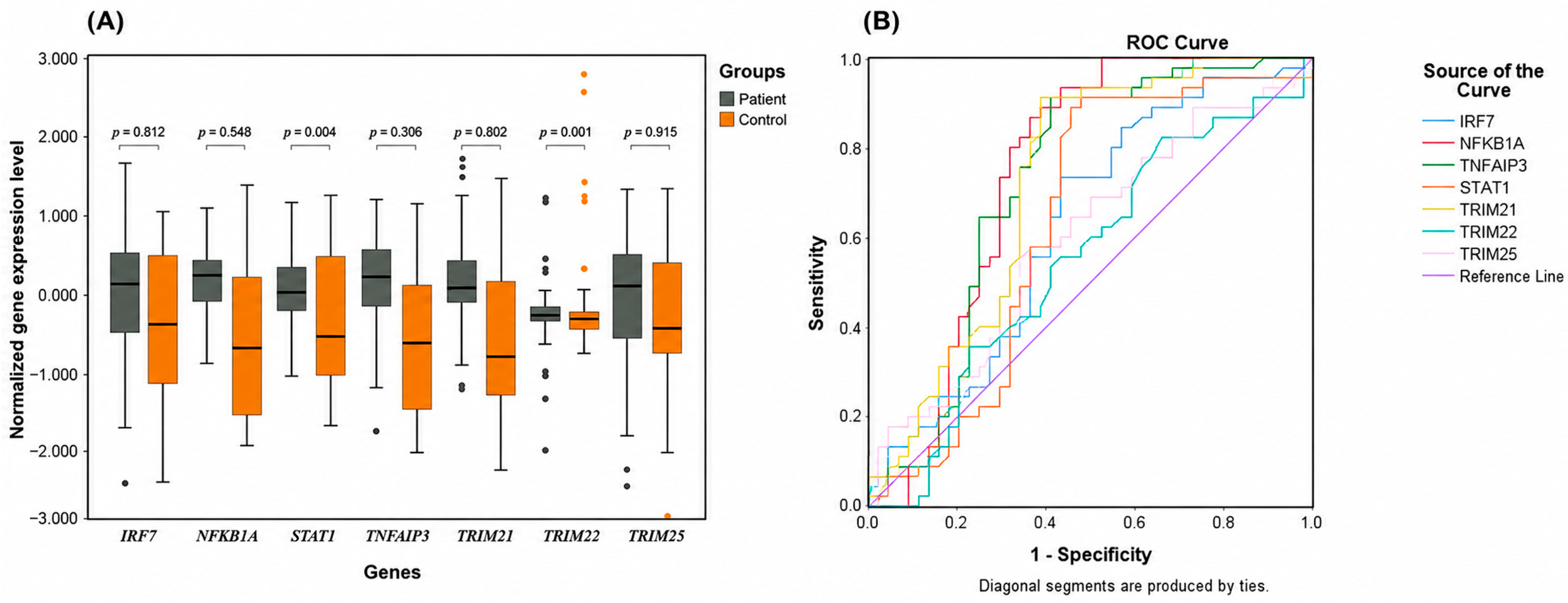
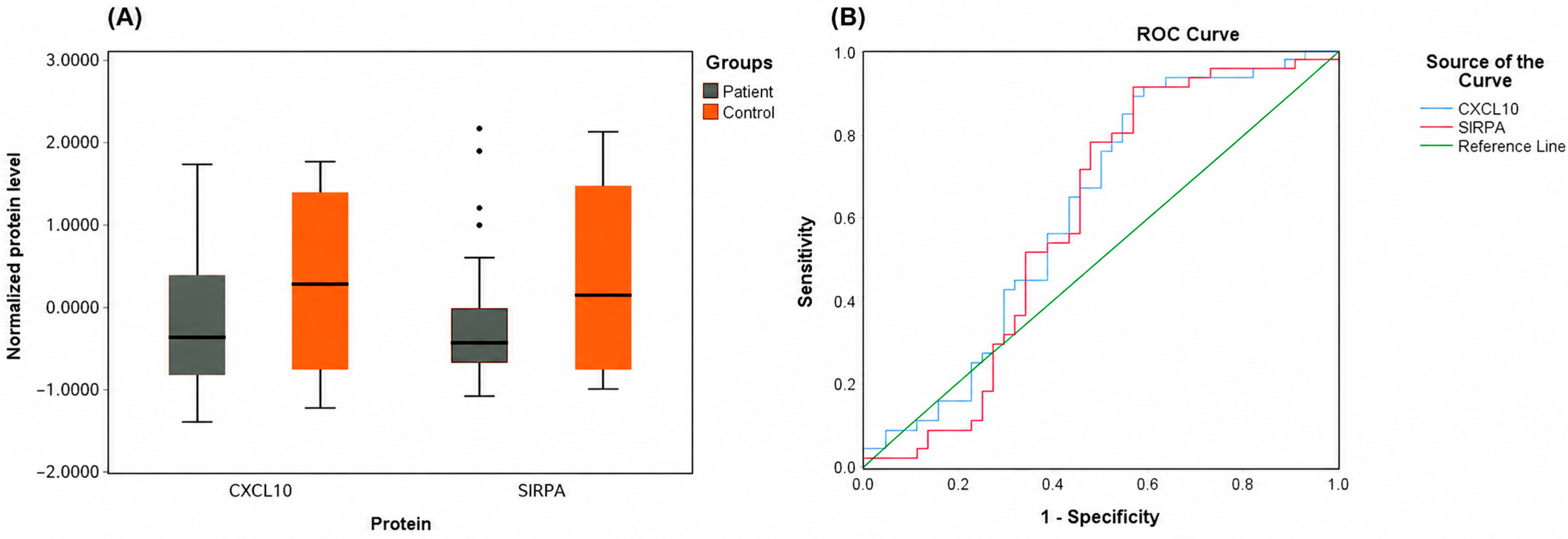
Ankylosing Spondylitis (AS) is a chronic inflammatory autoimmune rheumatic disease that primarily affects the spine and sacroiliac joints. This study aimed to investigate the expression levels of immune response-related genes, including IRF7, NFKB1A, TNFAIP3, STAT1, TRIM21, TRIM22, and TRIM25, as well as the serum levels of CXCL10 and SIRPA proteins in patients with AS. In addition, the potential diagnostic performance of these molecular and serum biomarkers in distinguishing patients with AS from healthy controls was evaluated. A total of 45 patients with AS and 44 healthy controls were included in the study. Immune-related gene expression levels were analyzed using RT-PCR. In addition, serum CXCL10 and SIRPA protein levels were evaluated using ELISA. The expression levels of NFKB1A, TNFAIP3, IRF7, STAT1, and TRIM21 were significantly increased in patients with AS compared to healthy controls (p < 0.05). In contrast, no significant differences were detected in the expression levels of TRIM22 and TRIM25. In the ROC analysis, the highest diagnostic performance was obtained for NFKB1A (AUC = 0.741), TNFAIP3 (AUC = 0.720), and TRIM21 (AUC = 0.722). Serum CXCL10 and SIRPA levels were not significantly different between the groups. In AS, genes particularly associated with NF-κB and interferon signaling pathways (NFKB1A, TNFAIP3, IRF7, STAT1, and TRIM21) were found to be significantly altered, and these genes may serve as potential molecular biomarkers for AS. In contrast, the diagnostic power of serum protein biomarkers is limited. These findings indicate that the potential of these genes as biomarkers for AS pathogenesis should be further supported by advanced studies evaluating their expression levels.